
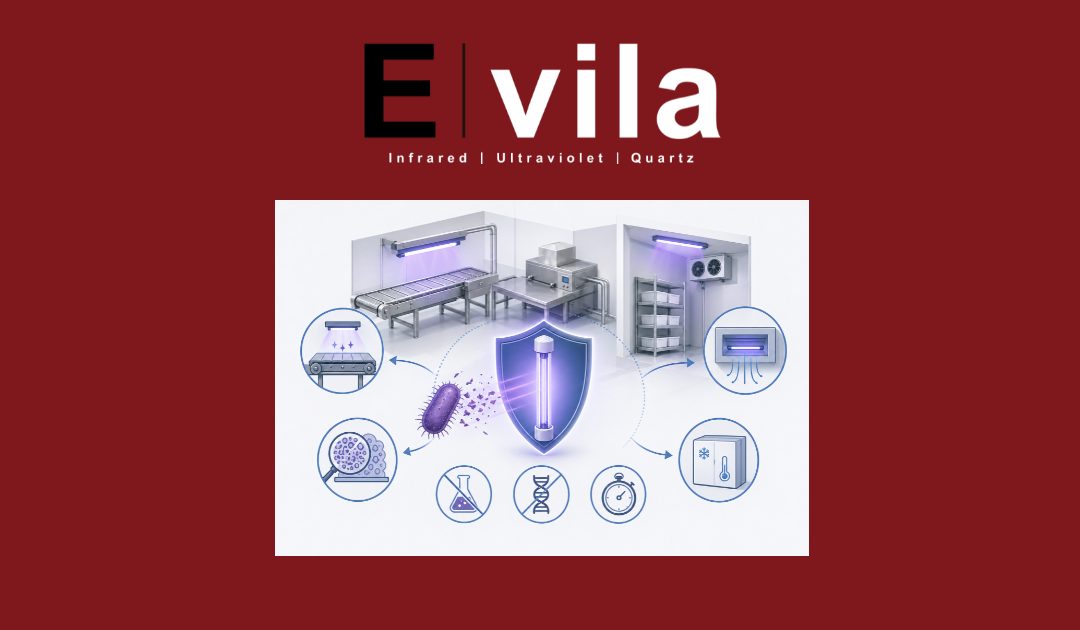
The persistence of Listeria monocytogenes in food processing environments remains one of the greatest challenges in food safety. As discussed in the study Persistence of Listeria monocytogenes in Food Processing Environments: Challenges and Future Directions, this pathogen can survive for long periods despite routine cleaning and sanitation programs. This is largely due to factors such as natural selection against chemical disinfectants, genetic drift, and recolonization from hard-to-reach areas.
In this context, ultraviolet (UV) technology emerges as a complementary and strategic tool within microbiological control programs.
Why Consider Ultraviolet Radiation?
The intensive and repeated use of chemical disinfectants—especially quaternary ammonium compounds—can promote the persistence of tolerant or resistant strains, as highlighted in the study, increasing the risk of chronic contamination in processing plants.
UV radiation, particularly UV-C (200–280 nm), offers several key advantages:
- It leaves no chemical residues
- It does not induce known genetic resistance
- It acts rapidly by damaging bacterial DNA
- It reduces the selective pressure associated with conventional disinfectants
Main UV Applications in Food Processing Environments
1. Surface and Equipment Disinfection
UV radiation can be used to treat food-contact surfaces, conveyor belts, worktables, and removable equipment. This is especially relevant in niches where liquid disinfectants lose effectiveness, such as cracks, joints, and shadowed areas—identified as critical persistence points for Listeria monocytogenes.
2. Biofilm Control
The study emphasizes the importance of biofilms as reservoirs for persistent strains. UV technology can help by:
- Reducing the surface microbial load of biofilms
- Limiting the release of viable cells during cleaning processes
- Complementing the mechanical and chemical action of traditional sanitation methods
3. Air and Environmental Treatment
Recolonization through aerosols and splashes during cleaning is one of the mechanisms described for pathogen persistence.
UV systems installed in:
- Air ducts
- High-traffic zones
- Cold processing rooms
can reduce the environmental microbial load and minimize the redistribution of Listeria.
4. Use in Refrigerated Areas
Because Listeria monocytogenes has a high tolerance to cold temperatures, UV radiation is particularly useful in refrigerated chambers, where other control strategies are often less effective and where the pathogen can survive and multiply.
UV as Part of an Integrated Strategy
The study highlights that the persistence of Listeria monocytogenes does not depend on a single factor, but rather on the interaction between bacterial biology, sanitation practices, and population dynamics.
In this sense, UV radiation should not be viewed as a standalone solution, but as:
- A complement to cleaning and disinfection programs
- A tool to reduce exclusive dependence on chemical disinfectants
- A support system to minimize the selection of persistent strains
Scientific evidence shows that controlling the persistence of Listeria monocytogenes in the food industry requires innovative and multifactorial approaches.
Ultraviolet technology stands out as an effective, sustainable, and scientifically aligned solution that helps reduce microbial load, limit recolonization, and improve long-term food safety.