
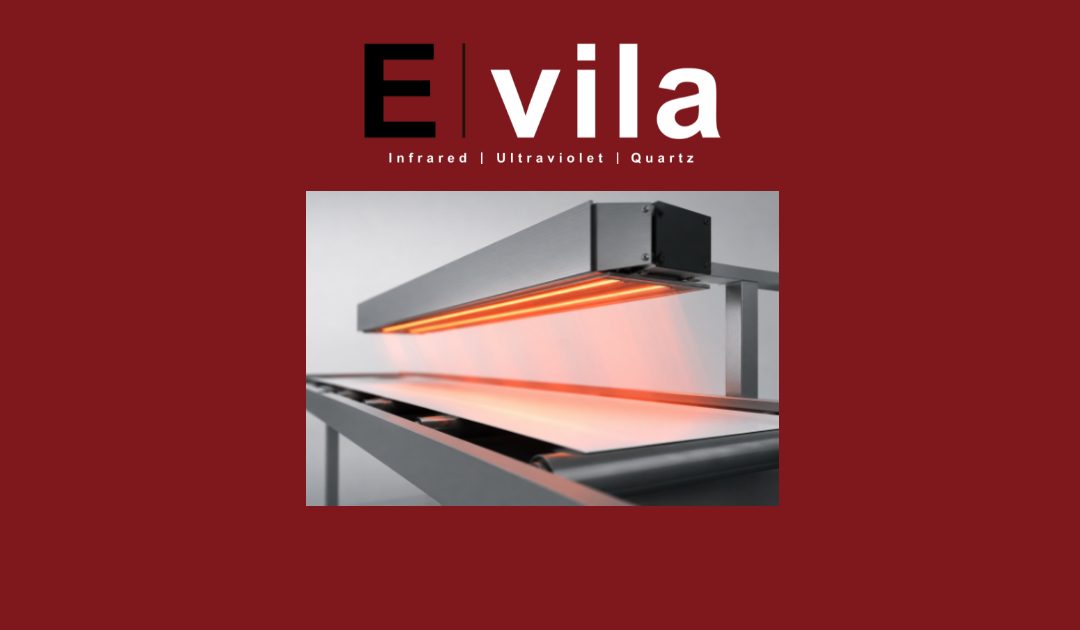
In many industrial sectors, drying is a critical stage of the production process. Whether in printing, textiles, automotive manufacturing, surface treatment, or material production, inefficient drying can lead to quality defects, increased energy costs, and reduced productivity.
Fortunately, infrared heating technology offers a more efficient and precise alternative to conventional drying systems.
1. Uneven Drying
One of the most common challenges in industrial drying is uneven heat distribution. Traditional hot-air systems can create temperature variations, causing some areas to dry too quickly while others remain insufficiently dried.
How Infrared Solves It
Infrared emitters deliver energy directly to the product surface or material being processed. This targeted heating approach helps achieve more uniform drying and improves process consistency.
2. Excessive Drying Times
Conventional drying systems often require heating large volumes of air before transferring heat to the product, which can significantly slow down production.
How Infrared Solves It
Infrared radiation transfers energy directly to the material, dramatically reducing warm-up and drying times. Faster drying enables higher production speeds without compromising quality.
3. High Energy Consumption
Industrial drying can account for a significant portion of a facility’s energy usage. Hot-air systems frequently waste energy by heating the surrounding environment rather than the product itself.
How Infrared Solves It
Infrared systems focus energy exactly where it is needed. By minimizing heat losses, manufacturers can reduce energy consumption and improve overall process efficiency.
4. Limited Production Space
Traditional drying tunnels often require substantial floor space to achieve the desired drying performance.
How Infrared Solves It
Because infrared systems respond quickly and transfer heat efficiently, they can be integrated into much more compact equipment designs, helping manufacturers optimize valuable production space.
5. Quality Issues and Surface Defects
Improper drying can lead to defects such as bubbles, cracking, warping, poor adhesion, or inconsistent finishes in coatings, paints, inks, and other surface treatments.
How Infrared Solves It
Precise control over temperature and drying rates helps ensure more consistent results, improving product quality while reducing waste and rework.
6. Complex Maintenance and High Operating Costs
Conventional drying systems often rely on fans, ducts, and other mechanical components that require regular maintenance and can increase downtime.
How Infrared Solves It
Infrared emitters have a simpler design with fewer moving parts, resulting in lower maintenance requirements and reduced operating costs over time.
The Value of a Customized Infrared Solution
Every industrial process has unique requirements. Factors such as material type, production speed, product thickness, and temperature targets all influence the ideal drying solution.
For this reason, many manufacturers are adopting custom-designed infrared systems tailored to their specific applications, enabling greater efficiency, improved product quality, and significant energy savings.
Drying-related challenges can directly impact productivity, product quality, and operating costs. Infrared technology provides an effective solution by delivering fast, precise, and energy-efficient heating.
By implementing the right infrared drying system, manufacturers can achieve more reliable processes, lower operational expenses, and enhanced overall production performance.